The story of my first encounter with the Armed Forces Officers Club and Hotel in Abu Dhabi. Designed by French architect Roger Taillibert and inaugurated in 1997, this 75-hectare complex was one of the most ambitious leisure and hospitality developments in the region I combining modernist design, monumental scale, and national symbolism.
In the United Arab Emirates, the first days of December mark Eid al Etihad - Union Day. On this occasion, I decided to go to Abu Dhabi for a long weekend. I spent three festive days there, away from the madness of Dubai and the rugby tournament happening at the same time. It was the fifty-third anniversary of this young country’s founding, celebrated with great fanfare. It is fascinating to observe how the national identity of a place that, sixty years ago, was merely an intersection of trade routes - home to Bedouins and pearl divers - is being shaped. I get the sense that this country, which has developed at lightning speed over recent decades, is only now finding time to look back.
When it comes to Emirati identity and history, my first stop in Abu Dhabi is the hotel called Erth. In Arabic, erth means “heritage”, and the word has been used to brand a new concept on the local hospitality scene. At the heart of the complex lies a promise of an authentic Emirati experience, expressed through architecture, hospitality, and culinary offerings.
The building itself is officially known as the Armed Forces Officers Club and Hotel. It was designed by French architect Roger Taillibert in the 1980s and inaugurated in 1997. The complex was envisioned by Sheikh Zayed bin Sultan Al Nahyan as a recreational centre dedicated to officers of the UAE Armed Forces. Spread across 75 hectares, it includes tennis courts, a running track, an Olympic-sized pool, shooting ranges, theatres, conference halls, hotel rooms, restaurants, and even a mosque.
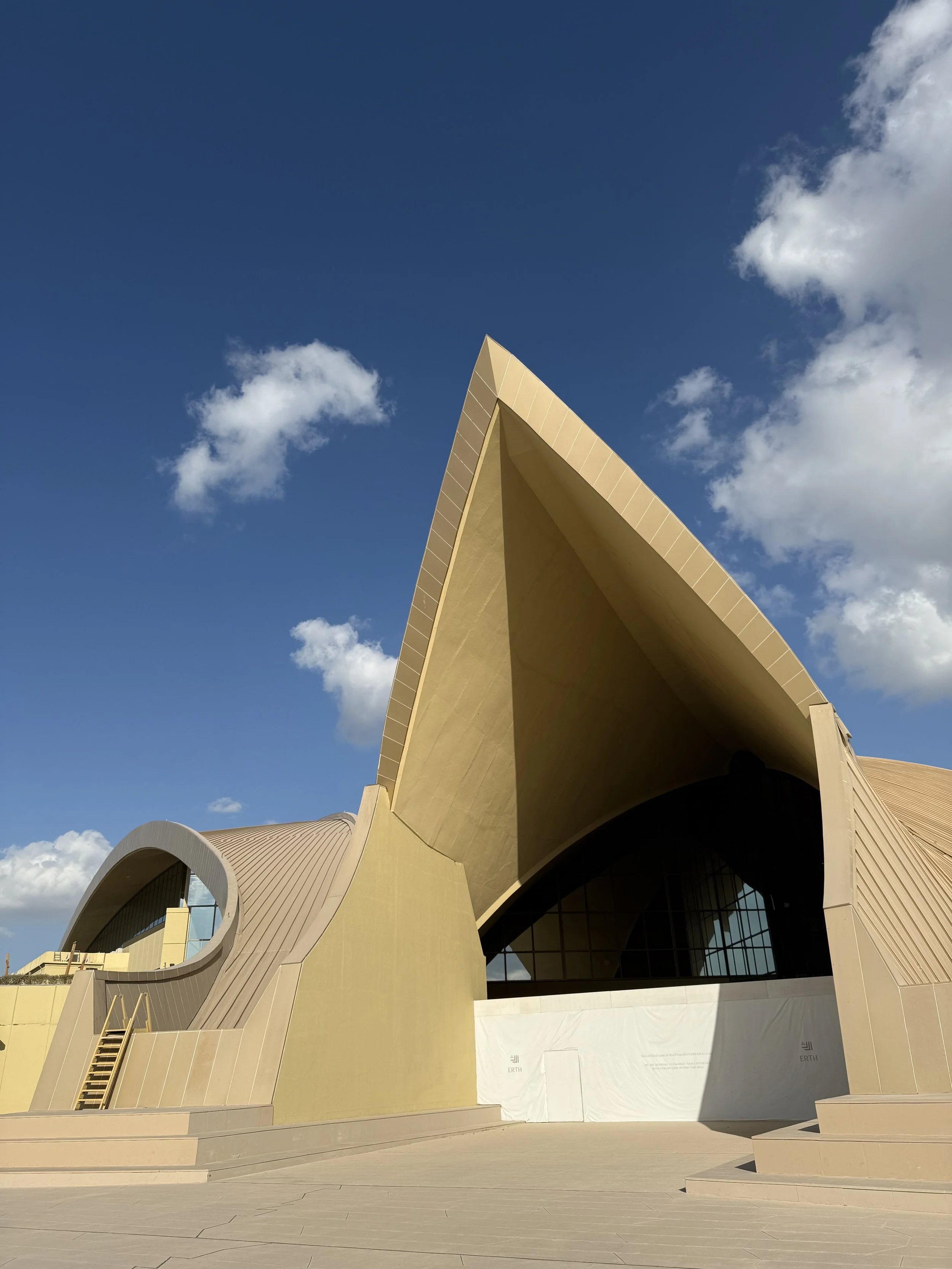
Taillibert, known for Paris’s Parc des Princes stadium, devoted his career to “building for sport and in the spirit of sport.” His work is characterised by extracting the maximum utility and expressiveness from materials and construction techniques - creating what some call technology-as-art. Unofficially, I learned that the roof of the Officers’ Club alone required tens of thousands of structural drawings. In sporting terms, this project was a marathon combined with heavy-weight training.
Even from the outside, the building is breathtaking. There is something futuristic about it - like a spacecraft poised for liftoff - although it was officially designed in the shape of a falcon. Its perfect symmetry inspires awe and a slight unease.
The eastern hotel wing, reopened in 2023, has undergone a thorough facelift. The interiors are elegant, minimalist, and warm. Materials and forms are modern, yet subtly reference tradition through details crafted by Gulf artisans and palm-leaf weaving. Staff uniforms in desert tones are impeccably tailored, and the reception area avoids formality through discreet standalone desks that remove distance between guests and employees.
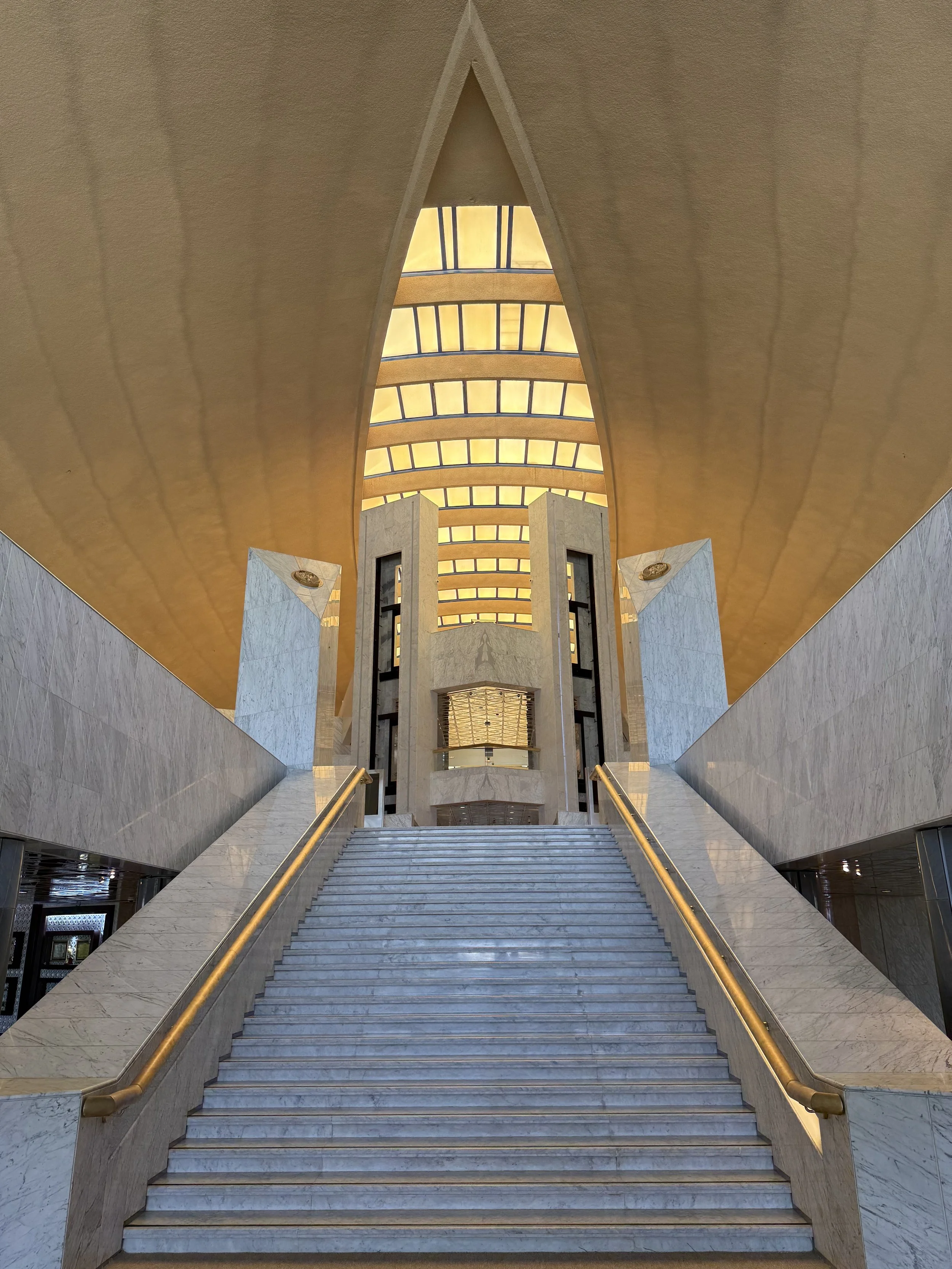
Along corridors lined with wool carpets reminiscent of desert sand shaped by wind, intimate majlis-style seating areas appear. Trays with dallah - traditional Arabic coffee pots - and cups are scattered throughout.
Shaikha Al Kaabi, CEO of the Erth Abu Dhabi brand, Erth Al Hosn restaurant, and École Ducasse Abu Dhabi Studio, explained in an interview:
“We actively invest in nurturing young Emirati talent, ensuring a dynamic and innovative team that enhances our guest experience and reflects our commitment to both tradition and modernity.”
That philosophy is strongly felt throughout the space - including in the recently opened Al Rimal restaurant.On my first evening, I left my room to find the restaurant and got lost, missing the elevators and ending up in a dead-end gallery corridor. My only option was an emergency exit. Hesitantly, I opened the door - and found myself in another world.
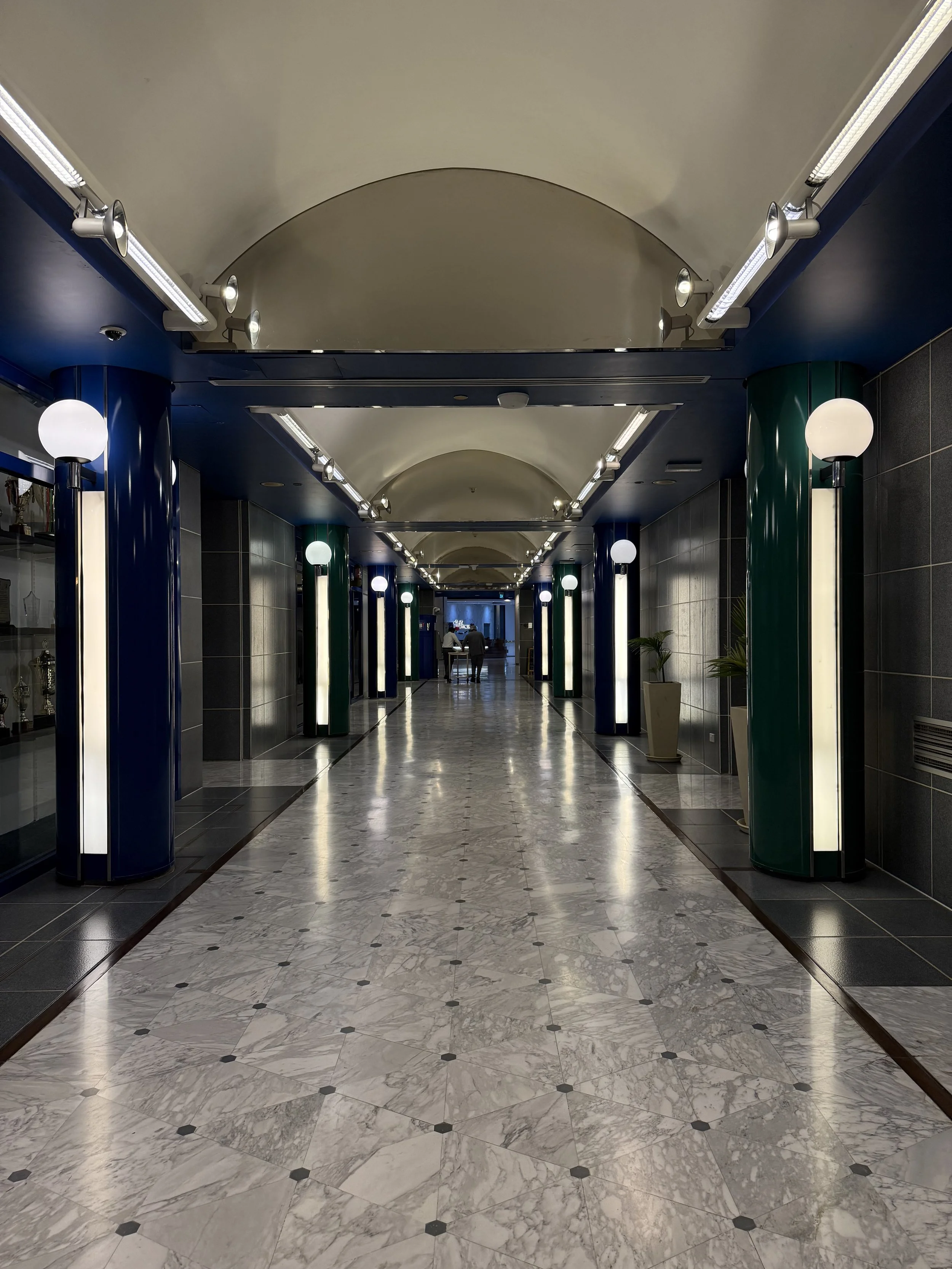
From contemporary spaces shaped by young Emirati talent, I suddenly stepped into 1990s Abu Dhabi. The area was deserted. Walls and floors were clad in vast expanses of grey marble, complemented by glossy stainless steel and touches of dark wood. Display cases housed trophies and military memorabilia from the UAE Armed Forces.
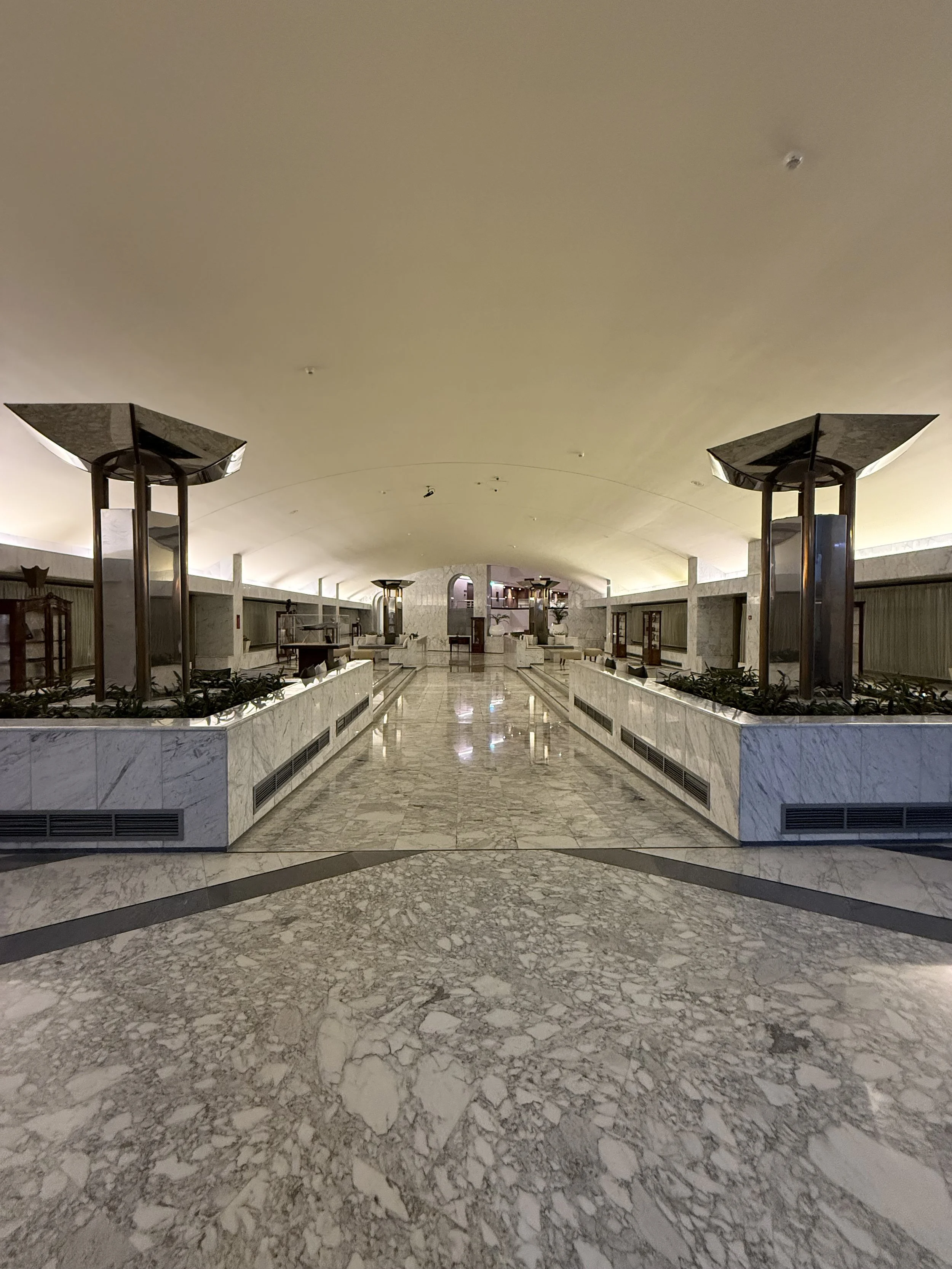
Moving through increasingly geometric spaces, gold elements appeared. Upholstered furniture evoked a royal majlis. Deep navy accents contrasted with grey surfaces; in places, granite replaced marble. The symmetry felt obsessive. For the first time, I understood the meaning of a “liminal space” - abandoned, surreal, slightly unsettling, yet irresistibly fascinating.
I heard rhythmic thuds and briefly imagined a tennis match, only to realise the sound came from a construction site hidden behind a white tarp. I wondered whether this magnificent marble universe - which once hosted figures such as Jacques Chirac and Gerhard Schröder - was destined for demolition.
The next day, I returned. I learned that the other wing of the complex still houses armed forces officers. There I met Mr. Prince Paulose, senior F&B manager, who has worked at the Officers’ Club since its opening in 1997. He generously gave me a full tour, including areas normally off-limits: a 600-seat theatre, wedding hall, conference rooms, gym, bowling alley, and office spaces now occupied by creative teams. These spaces host workshops and festivals year-round, serving as platforms for cultural exchange.
Mr. Paulose explained that the Erth kitchen also caters events linked to the royal family. He recalled Taillibert’s frequent visits long after the building’s completion and shared stories of visiting dignitaries. After so many years, the Officers’ Club feels like a second home to him.
When I asked whether the marble interiors would be entirely removed, he reassured me: some finishes may change, but there would be no total overhaul. Everything would be done with respect for what already exists.
I hope so. And I recalled Shaikha Al Kaabi’s words - that the Erth brand reflects a commitment to both tradition and modernity. The 1990s exist somewhere suspended between the two. It is precisely there that the true heritage of the Officers’ Club is etched.
